



























Brand – Refrigerator in Dallas
REFRIGERATOR SUPPORT FOR DALLAS Premium Refrigerator Maintenance & Repair in Dallas Expert refrigerator maintenance and repair services in Dallas, Texas. Unmatched Refrigerator Repair Services for dallas, texas Schedule Your Refrigerator Repair in Dallas Don't let spoiled food and warm drinks ruin y
REFRIGERATOR SUPPORT FOR DALLAS
Premium Refrigerator
Maintenance & Repair in Dallas
Expert refrigerator maintenance and repair services in Dallas, Texas.
Unmatched Refrigerator Repair Services for dallas, texas
Schedule Your Refrigerator Repair in Dallas
Don’t let spoiled food and warm drinks ruin your day. Uptown Appliance Repair offers prompt and reliable refrigerator repair services in Dallas. We’ll diagnose the problem quickly and get your fridge back to cooling efficiently. Contact us today for fast, expert service.
About Uptown's Refrigerator Repair Services in Dallas
We’re Dallas’s leading experts in premium refrigerator repair and maintenance. Our certified technicians have extensive experience working with all major brands, ensuring your refrigerator receives the specialized care it deserves. We’re committed to providing unmatched service and exceeding customer expectations, keeping your kitchen running smoothly.

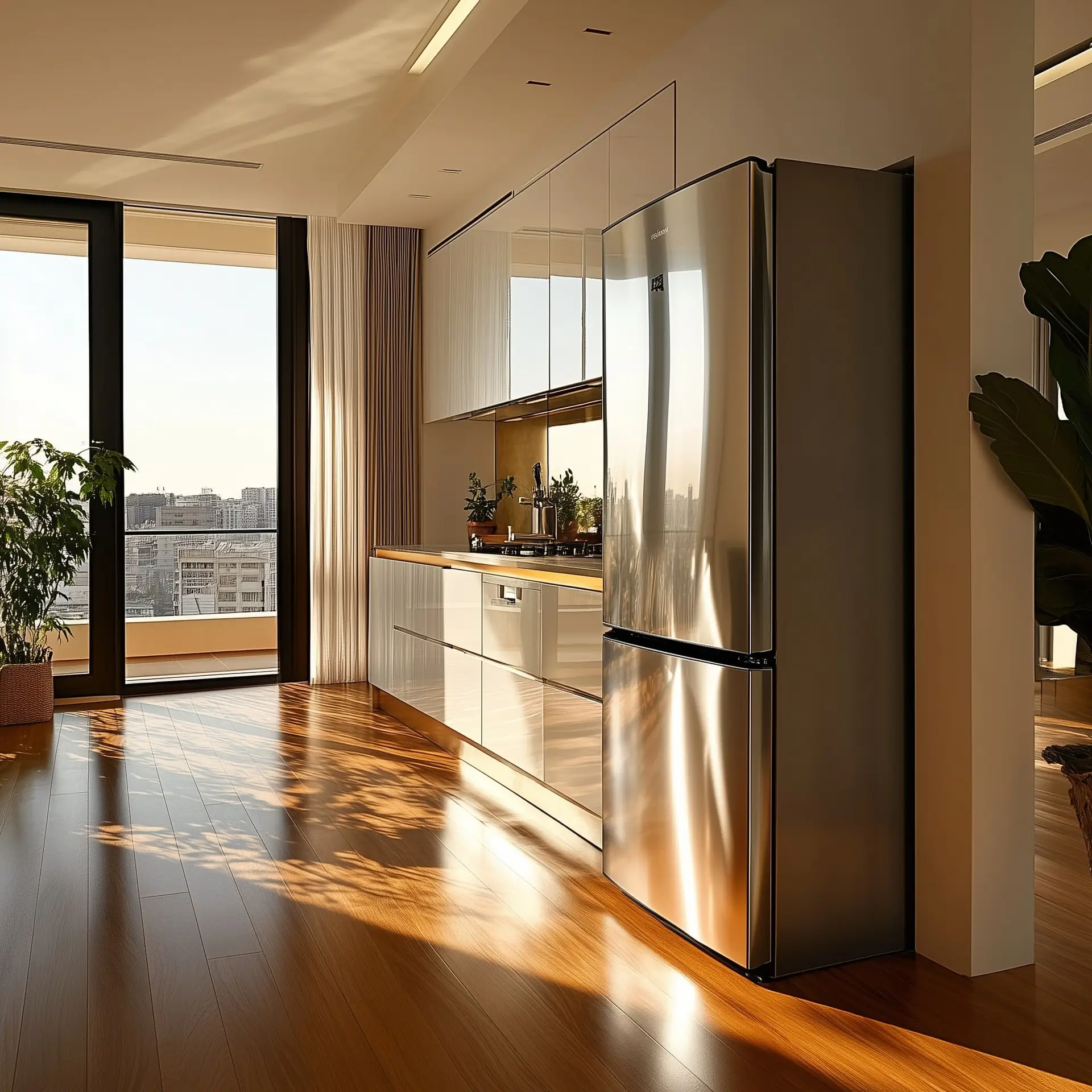
Refrigerator Not Working?
Dallas Residents, We Can Help!
Is your refrigerator not cooling properly, making strange noises, or leaking water? These are common refrigerator problems that require prompt attention. Ignoring these issues can lead to costly repairs, spoiled food, and unnecessary frustration. Uptown Appliance Repair offers fast and reliable refrigerator repair services in Dallas, diagnosing the problem quickly and getting your fridge back to optimal performance.
Common Refrigerator Problems
We Repair in Dallas
Our Dallas refrigerator repair experts handle a wide range of common refrigerator problems, including:

Dallas' Refrigerator Repair FAQs
Have questions about refrigerator repair in Dallas?
We’ve compiled answers to some of the most frequently asked questions:
Why is My Refrigerator Not Cooling?
Dirty Condenser Coils: Think of these as the fridge’s lungs. When they’re clogged with dust, the fridge can’t breathe right, impacting its cooling ability. A regular brush-up with a coil cleaning brush can keep them in tip-top shape.
Faulty Door Seal: If your fridge door seal is letting cold air escape, it’s like leaving the door open a crack. Check for any damage or gaps, and if you find some, it might be time for a replacement to keep that cool air where it belongs.
Temperature Settings: Ever set your thermostat to ‘tropical’ by accident? Ensure your fridge is set to maintain temperatures of 40°F or lower, as recommended by the FDA for safe food storage.
Blocked Vents: Your fridge needs good air circulation like we need a breath of fresh air. If items inside are blocking the vents, the cold air can’t do its job. A quick reorganization can solve this.
Evaporator Fan Issues: This fan circulates the cool air. If it’s on the fritz, your food might as well be sitting out at room temperature. A quick listen can sometimes diagnose a fan that’s not fanning.
Compressor Problems: The heart of your fridge, if it’s not beating right, nothing cools. This is often where a professional like those at Uptown Appliance Repair comes into play.
- Simple Oversights: Sometimes, it’s the little things. Is the fridge plugged in? Is there power? Don’t overlook the basics!
Why is My Refrigerator Leaking Water?
Blocked Defrost Drain: This is a frequent culprit where debris clogs the drain, causing water to accumulate and eventually leak. Regular cleaning can prevent this issue.
Faulty Door Seal: A damaged or worn gasket allows warm air in, leading to condensation. Inspect and possibly replace the seal to maintain efficient cooling and prevent leaks.
Water Line Problems: Water supply lines or inlet valves can leak due to damage or improper installation. Check connections and consider replacing them if necessary.
Damaged or Improperly Installed Water Filter: Incorrect installation or a cracked filter can result in leaks. Ensure it’s fitted correctly or replaced as needed.
Cracked Drain Pan: This pan collects water during defrost cycles; if cracked, water will leak onto your floor. Replacing the pan is straightforward but crucial.
High Humidity: In humid environments, excess moisture can enter the fridge when the door is opened, leading to condensation and leaks. This might require better home humidity control.
- Unleveled Fridge: For optimal cooling, the front should slightly elevate. If not, water might not drain properly, causing leaks. Use a leveling tool for adjustment.
Why is My Refrigerator Not Making Ice?
- Water Supply Issues:
- Clogged Water Filter: A filter past its prime or one that’s dirty can significantly reduce water flow, starving your ice maker of the water it needs. Replace it if it’s due or has been in use for over six months.
- Low Water Pressure: Ensure your home’s water pressure is adequate. Sometimes, external factors like a kinked water line or a partially closed valve can be the issue.
- Faulty Water Inlet Valve: This valve might be blocked or frozen, preventing water from reaching the ice maker.
- Temperature and Mechanical Issues:
- Freezer Too Warm: The freezer must be cold enough (below 10°F) for the ice maker to function. Check and adjust the temperature settings.
- Blocked Ice Maker Fill Tube: Ice or debris might be obstructing the fill tube. Clear any blockages found.
- Malfunctioning Ice Maker: The mechanism could be faulty, and require professional inspection or repair.
- Operational Checks:
- Control Arm: Ensure it’s in the ‘on’ position. If it’s stuck or accidentally moved to ‘off,’ no ice will be made.
- Door Switch: If the switch is broken or dirty, it might not signal the ice maker to operate when the door is closed.
How Long Do Refrigerators Last?
- Built-in models can last up to 20 years due to their robust construction and installation.
- Standard refrigerators typically serve for 10–15 years.
- Side-by-side units often last around 10 years.
- Bottom-freezer models might go up to 13 years.
- If your fridge is over 10 years old, even simple repairs might hint at the need for replacement due to energy efficiency concerns.
Look for signs like:- Food spoiling quicker than usual,
- Excessive frost or ice buildup,
- Unusual noises or silence despite being on,
- Puddles of water or excessive condensation.
How Much Electricity Does a Refrigerator Use?
- Size and Age: Larger and older models tend to consume more power. Newer, Energy Star-rated models are designed for efficiency.
- Running vs. Rated Wattage: While the label might show a higher wattage, fridges cycle on and off, using about one-third of their rated wattage, or around 72 watts per hour on average for a typical model.
Cost Calculation:
- Daily Use: If your fridge uses 230 watts per hour (based on 6 amps at 115 volts), it consumes approximately 5,520 watts or 5.52 kWh daily.
- Monthly Cost: With an electricity rate of $0.15 per kWh, the cost to run such a refrigerator would be about $0.82 per day or $24.60 per month.
If your refrigerator’s energy consumption seems unusually high, or if you’re considering upgrading to a more efficient model, Uptown Appliance Repair can provide detailed assessments and recommendations to optimize your appliance’s performance and lower your electricity bills.
Contact us through Dalla’s line: (214) 761.8300 or Visit us at 6621 Snider Plaza, Suite 275